







PTFE-Polypropylene Composite Mesh
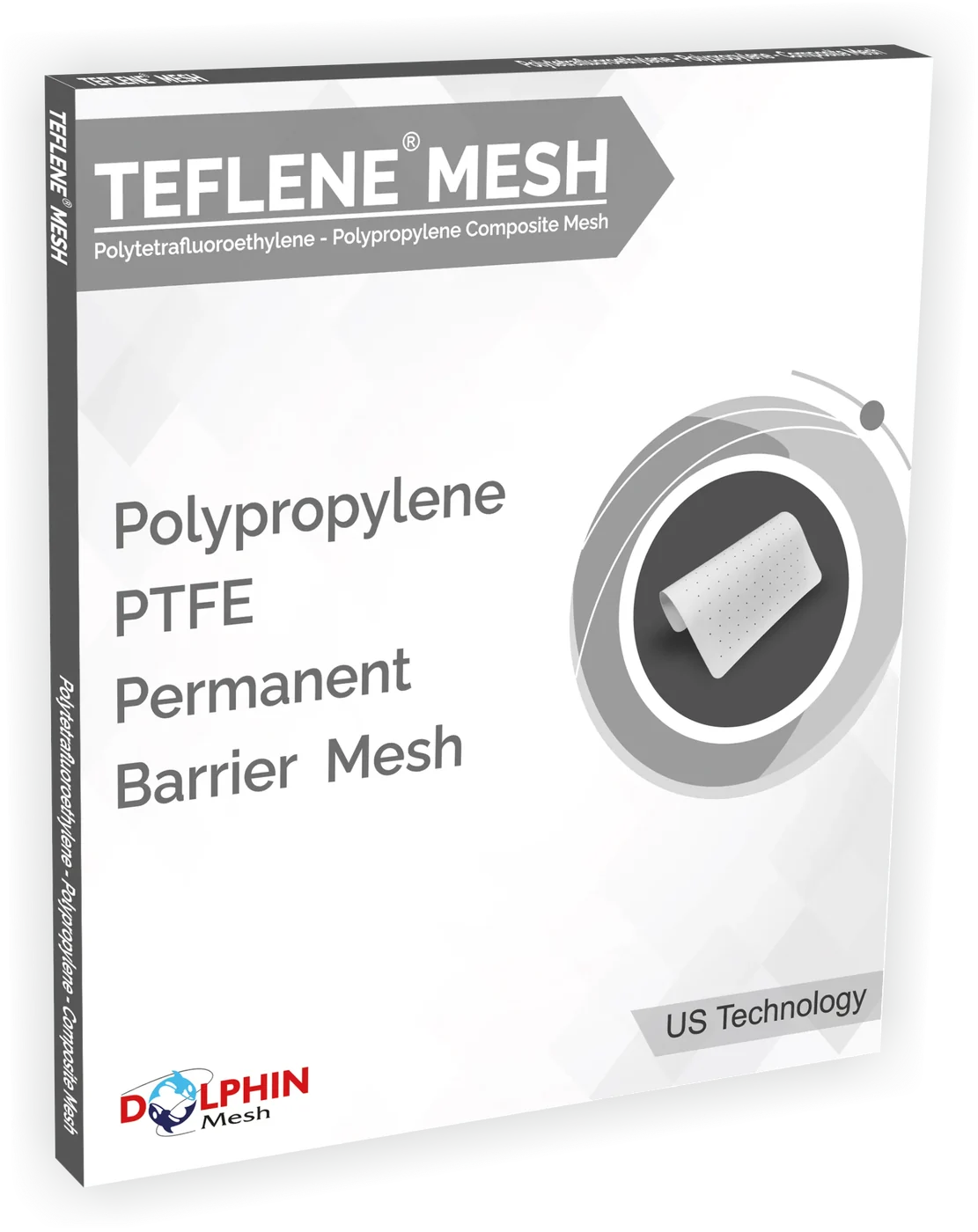
Teflene is a sterile, non-absorbable dual-sided composite mesh with a knitted polypropylene parietal side fused to an expanded PTFE (ePTFE) barrier on the visceral side, designed for open and laparoscopic intraperitoneal hernia repair.
Teflene, feature by feature.
Dual-sided meshes: a parietal side for tissue integration and a barrier film on the visceral side.
Dual-sided composite construction
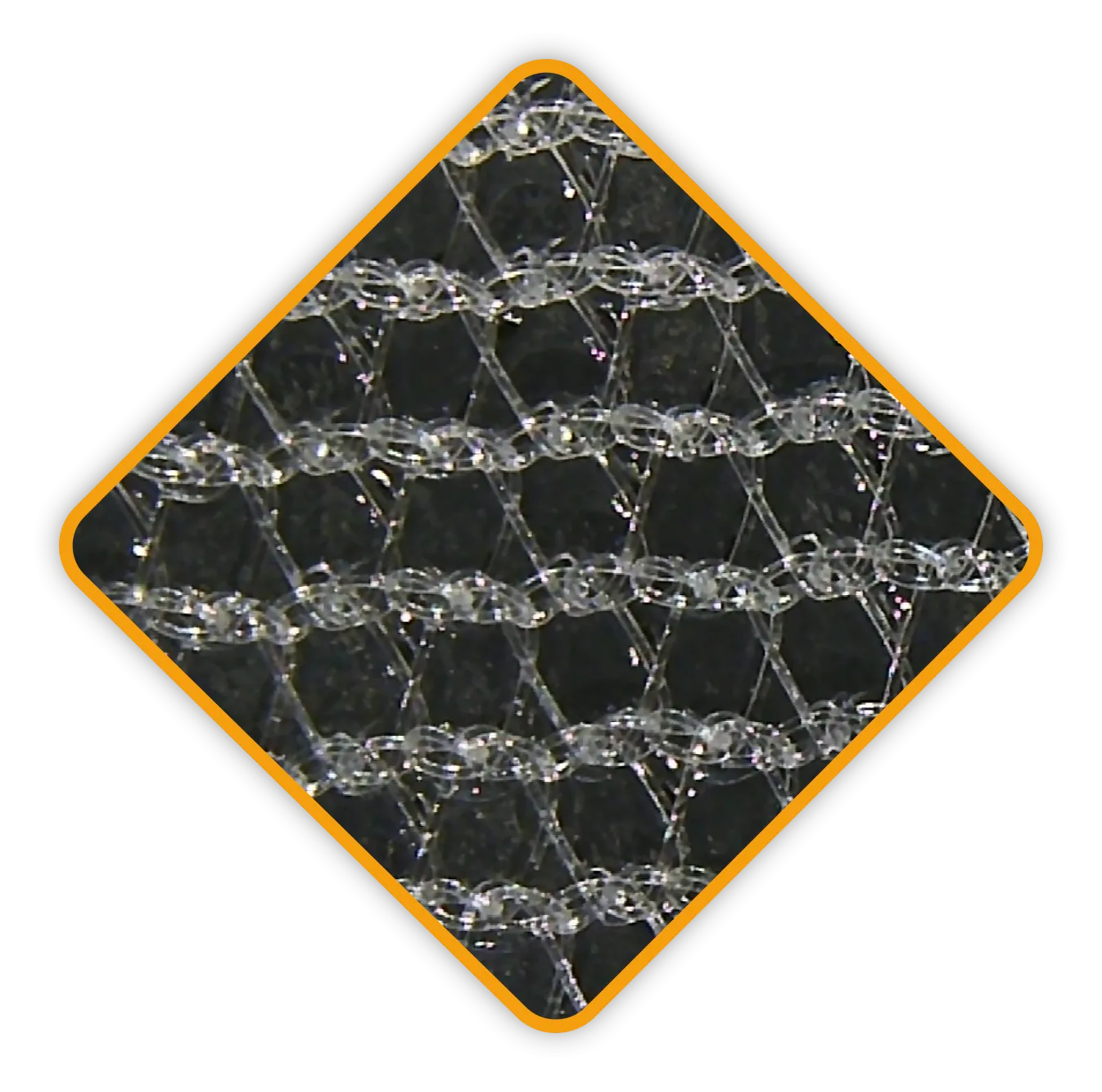
A knitted polypropylene mesh for the parietal side firmly fused to an expanded PTFE (ePTFE) sheet for the visceral side, forming a single composite mesh with two functionally distinct surfaces.
ePTFE barrier on the visceral side
The microporous, low-porosity expanded PTFE sheet is placed against the visceral side and is intended to act as a permanent barrier that minimises tissue attachment at that surface.
Macroporous polypropylene parietal side
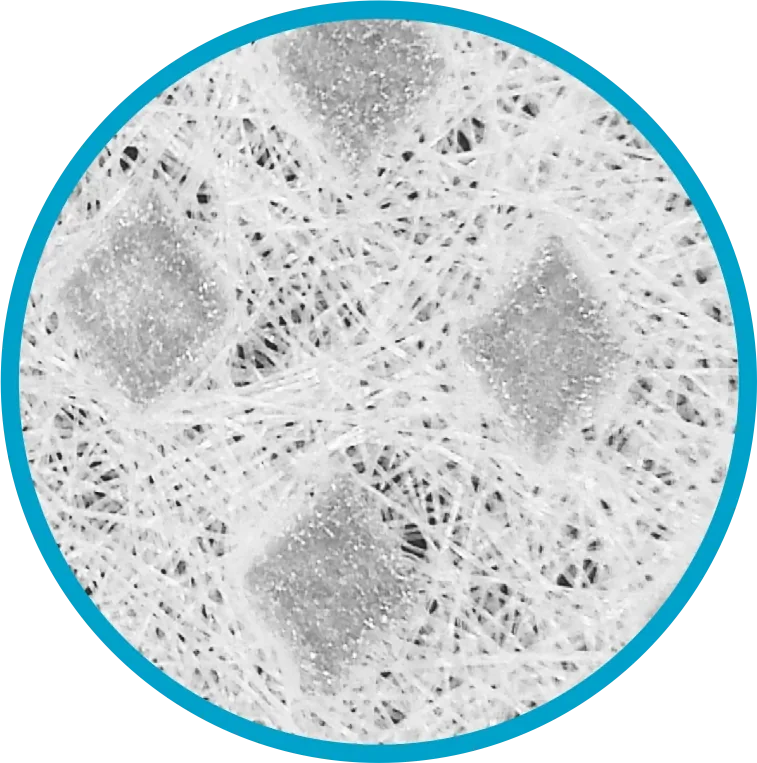
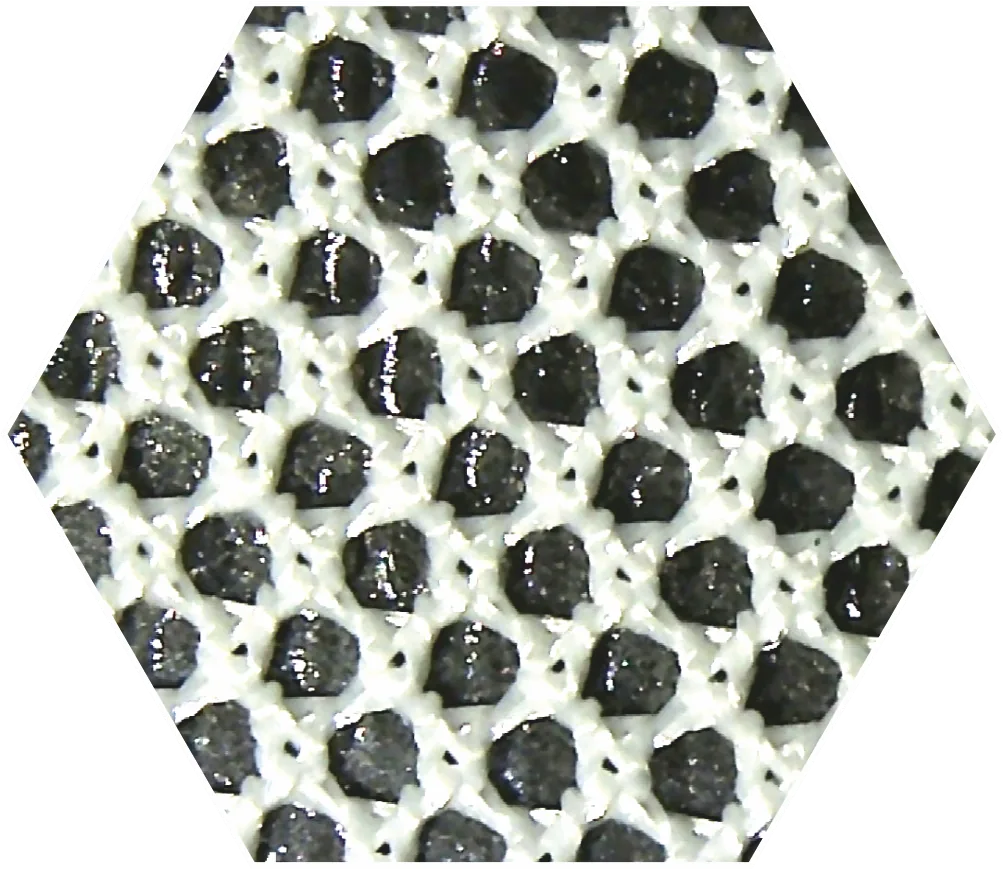
The macroporous knitted polypropylene surface is intended to encourage tissue ingrowth and integration on the parietal side of the mesh.
Inert fluoropolymer material
Expanded PTFE is a fluoropolymer with a carbon backbone saturated with fluorine, an inert material intended for permanent implantation.
Perforations for seroma drainage
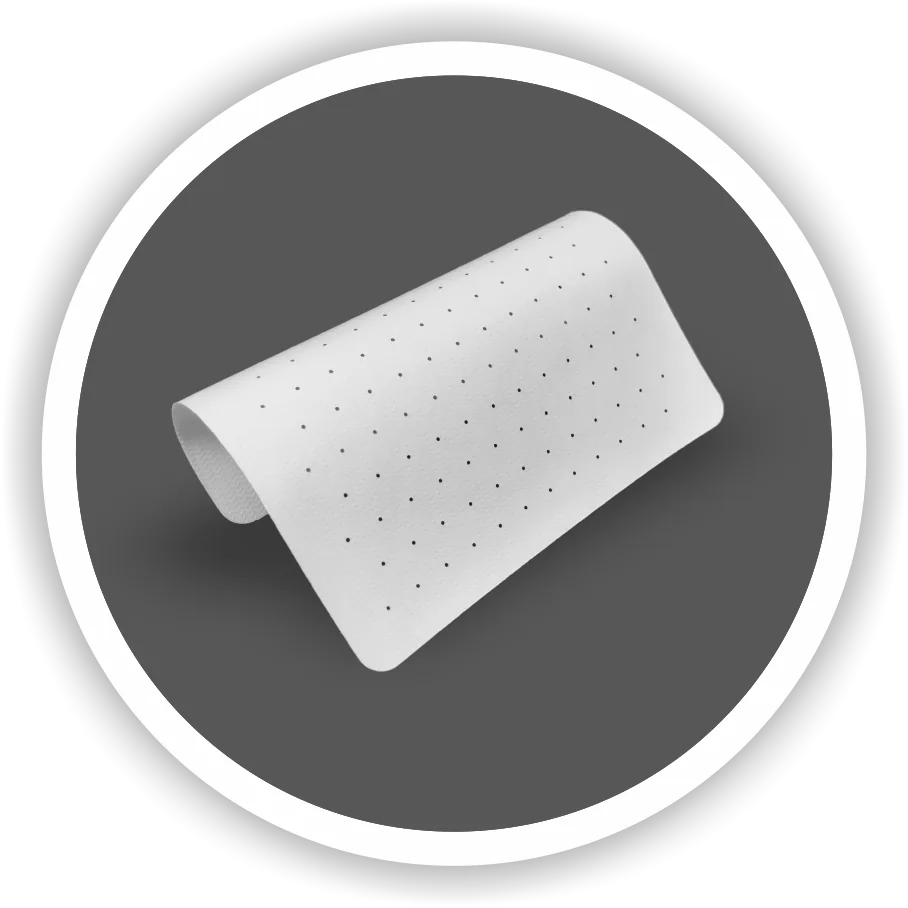
The mesh contains perforated holes that are intended to allow drainage of fluid and seroma.
Non-absorbable sterile prosthesis
A non-absorbable, sterile prosthesis supplied for single use in a range of shapes and sizes for open and laparoscopic intraperitoneal hernia repair.
Why surgeons choose Teflene
Performance and ‘first’ statements are from Futura Surgicare product literature. Always refer to the Instructions for Use supplied with the product.
- Permanent-barrier composite with excellent anti-adhesion properties.
- Inert PTFE induces less foreign body reaction, minimal inflammatory reaction and comparatively lower scar density.
- Engineered to minimise foreign body reaction and maximise long-term patient comfort and quality of life.
- Designed for improved mesh integration and reduced complications related to mesh shrinkage and scar plate formation.
- Safe and durable long-term results and a sound repair.
- Soft, supple mesh for better handling, with a placement marker.
What Teflene Mesh Is
Teflene is a sterile, non-absorbable composite mesh designed for intraperitoneal hernia repair. The dual-sided prosthesis fuses two functionally distinct surfaces into a single composite: a knitted polypropylene mesh intended to support tissue integration on one side and an expanded PTFE (ePTFE) sheet intended to act as a barrier on the visceral side. It is used for the reconstruction of soft-tissue deficiencies and is intended for use by a qualified surgeon trained in mesh implantation and the relevant surgical techniques.
Composition and Construction
Teflene is composed of a knitted polypropylene mesh for the parietal side firmly fused to an expanded polytetrafluoroethylene (ePTFE) sheet for the visceral side. Polytetrafluoroethylene is a linear homochain polymer with a carbon backbone saturated with fluorine, an inert fluoropolymer. The macroporous polypropylene surface is intended to encourage tissue ingrowth on the parietal side, while the solid, low-porosity ePTFE sheet is placed against the visceral side and is intended to act as a permanent barrier that minimises tissue attachment. The mesh also contains perforated holes intended to allow drainage of fluid and seroma.
Characteristics and Handling
A placement marker is provided to assist orientation. Proper orientation is essential: the ePTFE surface is placed against the bowel or other visceral structures, and the polypropylene surface faces the tissue plane where ingrowth is intended. The mesh can be fixed with sutures or tackers, with fixation engaging the mesh rather than the sealed edge alone. Selection of size, orientation and fixation method is at the discretion of the surgeon, based on the patient’s condition, the type and location of the defect, and operative requirements.
Applications
Teflene is designed for use in open and laparoscopic intraperitoneal placement, including:
- Ventral / incisional hernia
- Umbilical hernia
- Spigelian hernia
- Inguinal hernia — direct and indirect
- Epigastric hernia
Find your code
Narrow down by variant, shape, size or side — or browse every code below.
10 codes — narrow it down
| Code | Shape | Size | Copy |
|---|---|---|---|
| TMR0611 | Rectangular | 6 × 11 cm | |
| TMR0815 | Rectangular | 8 × 15 cm | |
| TMR1015 | Rectangular | 10 × 15 cm | |
| TMR1515 | Rectangular | 15 × 15 cm | |
| TMR1520 | Rectangular | 15 × 20 cm | |
| TMR3030 | Rectangular | 30 × 30 cm | |
| TMO1015 | Oval | 10 × 15 cm | |
| TMC10 | Circular | 10 cm | |
| TMC12 | Circular | 12 cm | |
| TMC15 | Circular | 15 cm |
For additional ordering and size information, contact our representative.
Frequently asked questions
Bulk pricing, OEM manufacturing and export documentation — response within one business day.
Contact sales →What is Teflene mesh made of?
What is Teflene intended for?
How is the mesh fixed?
Which way does Teflene face?
Is Teflene absorbable?
What sizes are available?
Distributor, hospital or surgeon?
Request product information, samples or regulatory documentation. Supplying hospitals and distributors in 85+ countries from Bangalore.