







Titanised Polypropylene Mesh: What the Titanium Coating Does
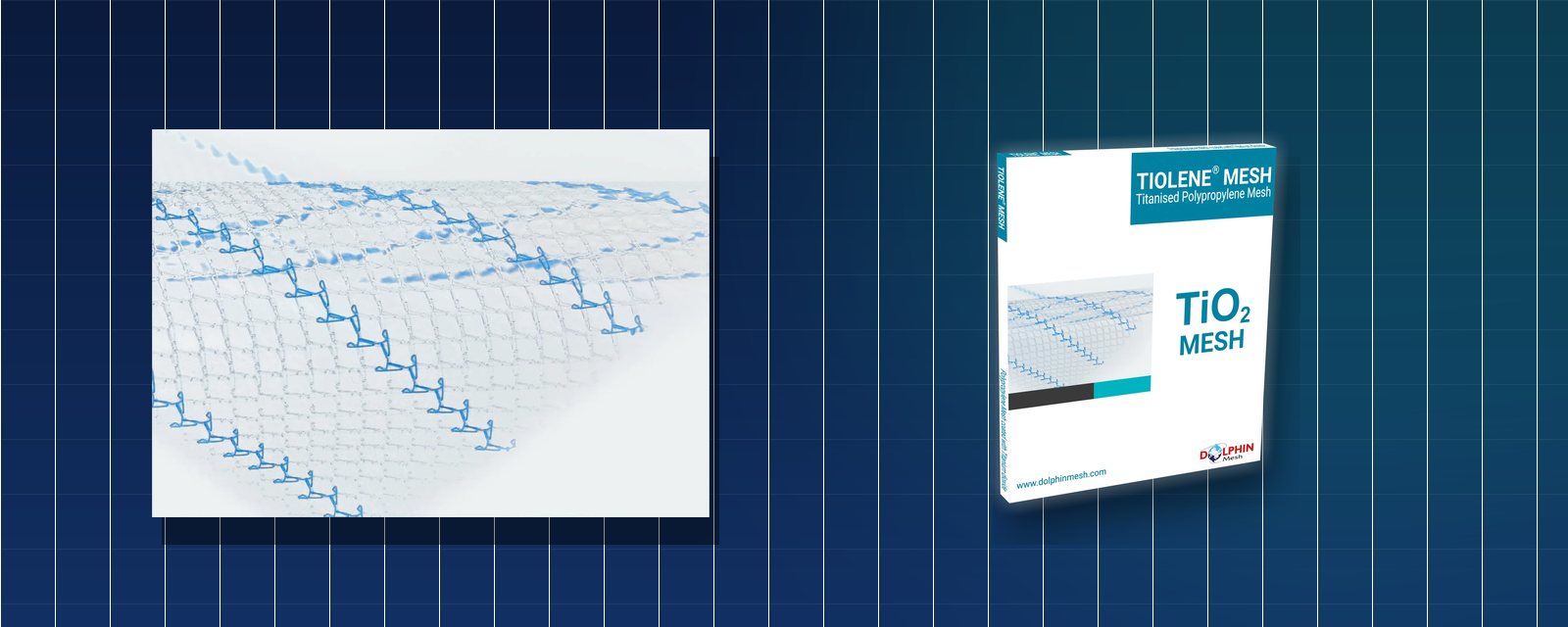
Polypropylene is strong, stable and proven in hernia repair. It is also hydrophobic — water beads on it rather than wetting it — and, like any implant, it provokes a foreign body response as the body walls it off. Titanised polypropylene meshes were developed to modify the surface the body actually meets.
What "titanised" means
In a titanised mesh, each knitted polypropylene fibre carries a thin, adherent titanium-containing surface coating. The bulk of the mesh is still polypropylene, with its familiar strength and handling; only the surface changes. Titanium is used because of its long record in medical implants, and the coated surface is hydrophilic — it wets readily — which changes how proteins and cells interact with the mesh.
Tiolene
Tiolene is a sterile, non-absorbable, lightweight monofilament polypropylene mesh with a titanium dioxide surface coating. According to Futura Surgicare, it is the first truly Made in India titanised polypropylene mesh. Its fibres are fully covered by a high-purity, adherent titanium dioxide coating, bonded to the polypropylene during manufacture.
Futura Surgicare's product literature describes Tiolene as offering:
- enhanced hydrophilicity and superior biocompatibility;
- minimal inflammation, causing less post-operative pain and discomfort;
- better, smoother ingrowth with less shrinkage and adhesion;
- less fibrous encapsulation and contraction, and less inflammatory response and foreign body sensation;
- low post-surgical recurrence rates;
- good tensile and bursting strength with excellent handling properties.
Designed for handling
Tiolene has a large-pore structure that supports seroma drainage, blue orientation stripes to help the surgeon align the mesh, and laser-cut edges. It is supplied in medium-pore and large-pore variants, in rectangular and square sizes from 6 × 11 cm to 30 × 30 cm — 13 codes in all, listed on the Tiolene product page.
Where it is used
Tiolene is designed for open and laparoscopic hernia repair in positions where a barrier mesh is not required — for example in inguinal repair or in sublay (retromuscular) ventral repair. For intraperitoneal placement facing the bowel, a composite barrier mesh such as Silene or Duolene is used instead.
This article is general information for healthcare professionals. Performance and ‘first’ statements are from Futura Surgicare product literature; always refer to the Instructions for Use.
Distributor, hospital or surgeon?
Request product information, samples or regulatory documentation. Supplying hospitals and distributors in 85+ countries from Bangalore.